Bioinspired & Integrative Science

Science today, though based on the classical disciplines, requires highly multidisciplinary environments, where each member has a unique and distinctive specialization, and a solid foundation on science and humanities to explore new fields and develop new relationships with other disciplines.

In the Fermart Lab we leave behind the traditional concept of science as a group of predetermined branches, developing future science and technology from a holistic approach, where the most important technological and scientific advances rely on several of the so called classical disciplines.

Current Interests

  • Biomaterials
  • Bioinspired Engineering
  • Cell-Surface Interactions
  • Solid State Physics
  • Medical and Tissue Engineering
  • Animal Physiology

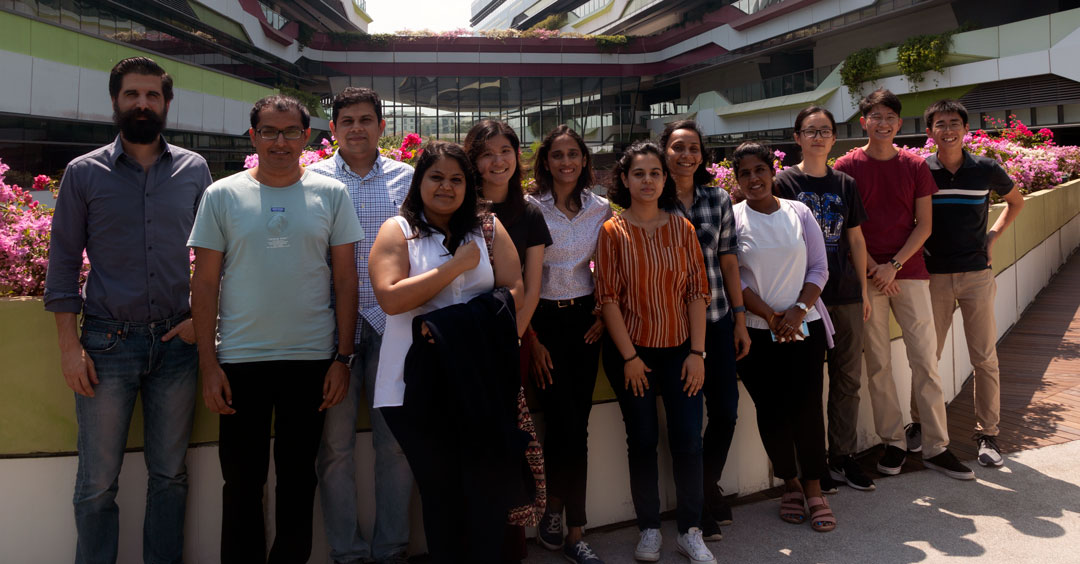
The Team

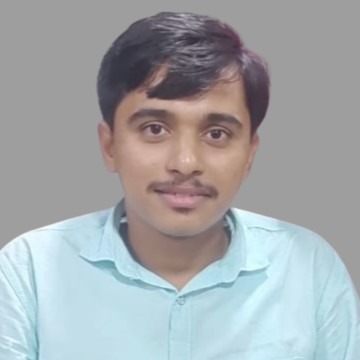
Akshayakumar Kompa

Akshayakumar Kompa

Postdoctoral Fellow

I recently started working as a postdoctoral fellow at The Fermart lab. My previous research work was focused on the synthesis and characterization of nanostructured materials in powder and thin films form. In addition, fabricated nanomaterials-based devices for high performance photosensor and photocatalytic applications. The core research interest involves structure property correlation, defect engineering, and surface modification of materials for their suitability in applications. Linkedin Profile
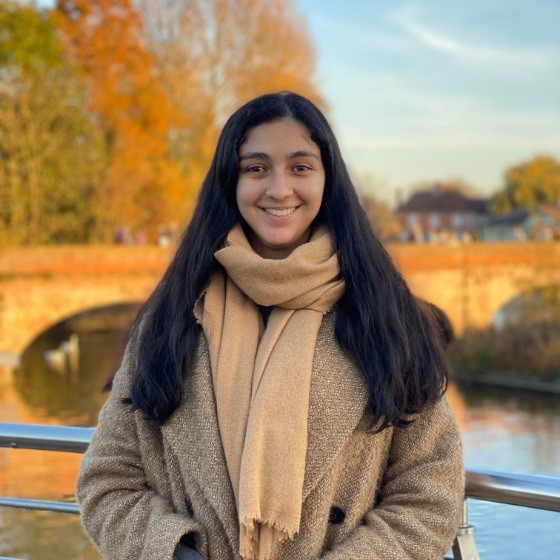
Angela María Ramírez Rosales

Angela María Ramírez Rosales

IBEC/UB PhD

Angela is a PhD candidate at The Fermart Lab, working on the development of nanocellulose-based materials. She holds a BSc in Biomedical Engineering from Universidad de Los Andes (Colombia), where she gained research experience in regenerative medicine and tissue engineering. During her MRes in Chemistry at the Spicer Group at the University of York (UK), she developed a dynamic alginate hydrogel. She also designed a device for laparoscopic surgery, with which she participated in Oxelerator Colombia 2018. Angela is currently part of the The EURL ECVAM Student Ambassador Project. Her research interests focus on human-relevant, affordable, and inclusive Non-Animal Methodologies (NAMs), guided by the principles of ahimsa, seva, and ubuntu. Outside the lab, she finds joy in meditation, volunteering for social causes and gender equality, and exploring the world.
Revathi Ravindran

Revathi Ravindran

IBEC/SUTD PhD

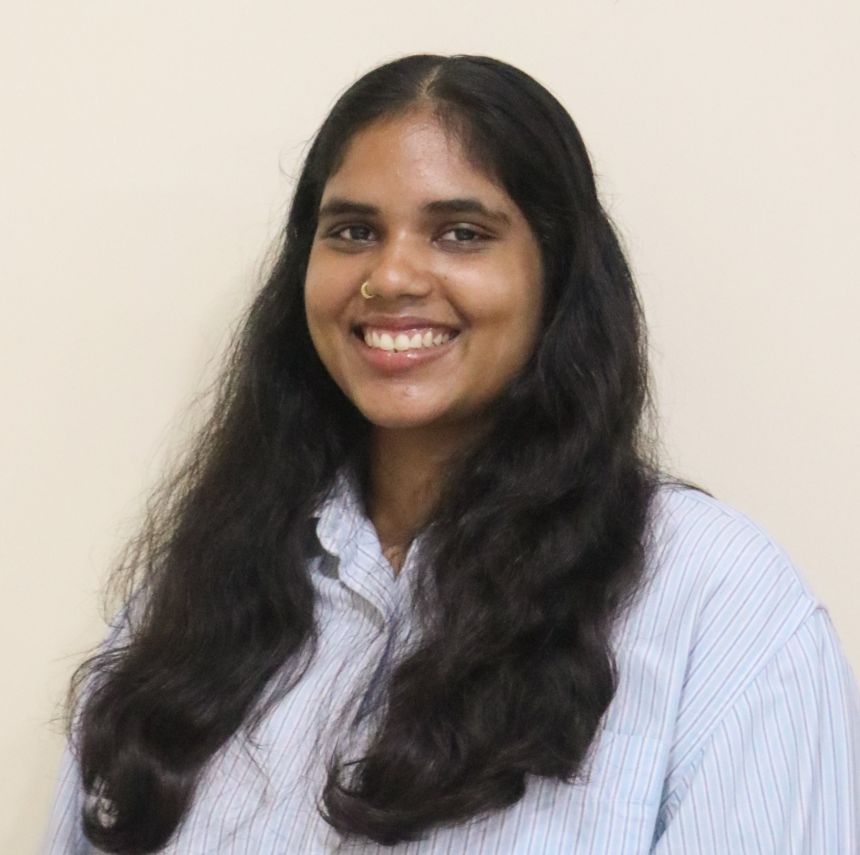
I am a third-year PhD student at the Singapore University of Technology and Design (SUTD). My research focuses on sustainable design, with an emphasis on environmentally responsible materials and systems for healthcare applications. Outside of research, I enjoy playing and watching sports.
Keerthy Reghunandanan

Keerthy Reghunandanan

IBEC/SUTD PhD

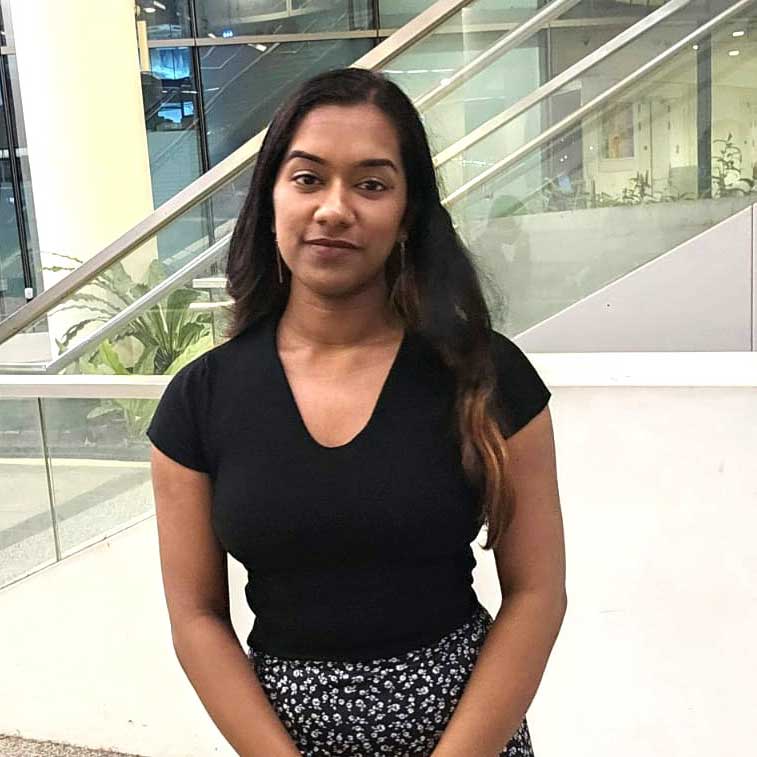
I am a PhD candidate in the Fermart Lab, where my research focuses on developing microfabricated tumor-on-chip platforms to study cancer cell metastasis, integrated with machine-learning approaches to predict migratory behavior.
I completed my Bachelor’s and master’s degrees in biotechnology at VIT, Vellore (India). In my Master’s, I undertook a summer project at the Tata Memorial Centre – ACTREC, where I developed hands-on skills in mammalian cell culture and a range of molecular biology techniques.
After my Master’s, I spent a year as a research intern in the Red Cell Diseases Laboratory at the Regional Centre for Biotechnology–RGCB (Kerala, India). There, I worked on structure-based drug discovery for malaria infections and developed a deep-learning tool to classify red blood cell maturation stages.
Outside the lab, I enjoy athletics—especially running—, sci-fi comics, speedcubing, and travelling. I’m also deeply interested in observing human behavior and psychology, and I often find myself reading books on these topics in my free time.
LinkedIn
Ajay Kumar

Ajay Kumar

SUTD PhD

Ajay recently joined as a PhD student at the Fermart Lab. He is a diligent researcher in the field of Polymer Science. His research interests include biopolymers, nanomaterials, additive manufacturing, biomedical devices, polymer packaging, and wastewater treatment.
After finishing his Master’s degree, he had three years research experience at the Indian Institute of Technology, Guwahati, India as a Research Fellow and at the Laboratory for Advanced Research in Polymeric Materials (LARPM), Bhubaneswar, India as a Project Associate. He has published articles in peer reviewed international journals.
His current research focuses on the development of novel polymer nanocomposites-based applications using additive manufacturing. Through his research and training, he hopes to apply scientific knowledge for the benefit of humankind.
His interests/hobbies include travelling, vlogging, photography, playing football & cricket, beatboxing etc.
YouTube

The Fermart Lab is a multidisciplinary environment of extremely talented and motivated researchers. They form an exceptionally creative and collaborative team, offering great flexibility and opportunities for innovation. Here, researchers from very different cultural and scientific backgrounds, join forces to develop the latest scientific advances and technological applications across disciplines.

Login to Members Area

Alumni

Jian Yu Hao (Master Student). LinkedIn

Project Title: “Bio-inspired functional materials for structural colors and adhesives”

Shiwei Ng (Ph.D. Candidate). LinkedIn

Project Title: “Study And Development Of Circular Manufacturing Models Based On Bioinspired Materials”

Benjamin Ng (Master Student).

Project Title: “Study of Relationships Between Particle Geometry and Mechanical Properties in Organic-Metal Composites”

Jing Xu (Research Assistant). LinkedIn

Project Title: “Real-time monitoring with 2D laser profile scanners in manufacturing”

Cherie Hu Zi Ying (Master Student). LinkedIn

Project Title: “3D Printing with Cellulose-based Materials”

Jian Li Hoo (Master Student). LinkedIn

Project Title: “Geometric Accuracy in Large-scale Additive Manufacturing”

Balasubramanian Rukmanikrishnan (Postdoctoral Researcher). LinkedIn

Project Title: “Hygroscopic forces in biopolymers”

Jyothsna Vasudevan (Ph.D. Candidate). LinkedIn

Project Title: “Modelling Cancer Cell Migration in Tumor-on-Chip Platforms and Future Integration with Machine Intelligence”

Rupambika Das (Ph.D. Candidate). LinkedIn

Project Title: “Guiding Controlled Stem Cell Differentiation and Preservation for Tissue Engineering Application”

Anupama Prakash (Visiting Researcher). LinkedIn

Project Title: “Bioinspired materials based on microbial cellulose”

Ashaa Preyadharishini (Ph.D. Candidate).

Project Title: “Characterization, Isolation, and Utilization of Paramecium Aurelia for Detection of Water Pollution”

Komal Agarwal (Ph.D. Candidate). LinkedIn

Project Title: “Tough and Impact-Resistant Helicoidal Electrospun Fiber-Reinforced Composites”

Aravind Kumar Jayasankar (Postdoctoral Researcher). LinkedIn

Project Title: “Modelling biomaterials deformation by Finite Element Analysis”

Naresh Sanandiya (Postdoctoral Researcher). LinkedIn

Project Title: “Composites for Additive Manufacturing”

Hemant Raut (Postdoctoral Researcher). LinkedIn

Project Title: “Bio-inspired Composites for Biomedical Implants

Yadunund Vijay (Master Student) SUTD 2018 Best MSc award. LinkedIn

Thesis Title: “Development and Optimization of a Sustainable, Large-scale & Rapid Additive Manufacturing Process using Natural Materials

Naomi Chia (Research Assitant) LinkedIn
Undergraduate and Summer Students

Sarah Maheen Siddiqui (Lehigh University, USA)

Project Title: “3D Printing Chitosan for Potential Applications in Tissue Regeneration

Lieu Wei Ying (Y2017-Freshmore) & Mason Petra Agung (Y2017-Freshmore)

Project Title: “Mussel-inspired biopolymer hydrogel for wet adhesion

Denise Chia (Y2014-EPD)

Project Title: “The role of polymer alignment in structural biomaterials

Research Projects

  • Fungus-like Additive Materials

    Large-scale manufacture with biological materials

    Cellulose is the most abundant and broadly distributed organic compound and industrial by-product on Earth. Yet, despite decades of extensive research, the bottom-up use of cellulose to fabricate 3D objects is still plagued with problems that restrict its practical applications: derivatives with vast polluting effects, used in combination with plastics, lack of scalability and high production cost.

    We have demonstrated the use of cellulose to sustainably manufacture/fabricate large 3D objects. Our approach diverges from the common association of cellulose with green plants and is inspired by the wall of the fungus-like oomycetes, which is reproduced introducing small amounts of chitin between cellulose fibers. The resulting fungal-like adhesive material(s) (FLAM) are strong, lightweight and inexpensive, and can be molded or processed using woodworking techniques. This material is completely ecologically sustainable as no organic solvents or synthetic plastics were used to manufacture it. It is scalable and can be reproduced anywhere without specialised facilities. FLAM is also fully biodegradable in natural conditions and outside composting facilities. The cost of FLAM is in the range of commodity plastics and 10 times lower than the cost of common filaments for 3D printing, such as PLA (polylactic acid) and ABS (Acrylonitrile Butadiene Styrene), making it not only more sustainable but also a more cost-effective substitute.

    This first large-scale additive manufacturing process with the most ubiquitous biological polymers on earth will be the catalyst for the transition to environmentally benign and circular manufacturing models, where materials are produced, used, and degraded in closed regional systems. This reproduction and manufacturing with the material composition found in the oomycete wall, namely unmodified cellulose, small amounts of chitosan –the second most abundant organic molecule on earth — and low concentrated acetic acid, is probably one of the most successful technological achievements in the field of bioinspired materials.

  • Shrilk family of materials

    Man-made Natural Materials

    Plastics production has increased from 0.5 to 380 million tons per year since 1950. The increasing use of plastics, which in most cases are prepared by polymerization of monomers derived from a nonrenewable source, creates major waste management and environmental problems. Most of the plastic produced is used to make disposable items or other short-lived products that are discarded within a year of manufacture. These objects account for approximately 30 percent of the waste we generate, which accumulates in landfills or contaminates large areas of marine habitats – from remote shorelines and heavily populated coastlines to areas of the deep sea that were previously thought to be virtually inaccessible. These factors highlight the unsustainability of the current use of plastics, which is driving a growing interest in biomaterials that are fully biodegradable and recyclable.

    At the Fermart lab we are developing the next generation of materials for sustainable development. Our first version of “Shrilk”, based on the chemistry and molecular design of the insect cuticle, is transparent, biodegradable, and has an ultimate strength in the same range as aluminum alloys, but at half their density. It is made of silk proteins and waste material from the fishing industry (i.e. chitin). Seafood processing factories generate over 250 billion tons of chitin biopolymer that is typically dumped back into the ocean, negatively affecting coastal ecosystems.

    Shrilk represents a groundbreaking approach to sustainable development. It is based on the association of natural components and their molecular design as a sole entity. We demonstrated how structural natural materials with engineering relevance, are only achievable by controlling both characteristics and their relation. This approach, linking together manufacture, biological design, and biomolecules, has started a complete new approach to sustainable and bioinspired materials.

    Shrilk is considered one of the most important advancements for sustainable development in the last decade. It has been reviewed by the most prominent media outlets around the world, and has been referred as “one of the materials that will change the future of manufacturing” (Scientific American), as a “Supermaterial” (National Geographic) and as “the material that will save the world” (BBC).

  • Biomaterials for Medicine

    Biomaterials for tissue engineering and biomedicine

    Biomaterials are used in medical devices or in contact with biological systems. Biomaterials as a field has seen steady growth over its approximately half century of existence and is highly multidisciplinary, as it merges medicine, biology, chemistry, materials science and engineering. While biomaterials were traditionally designed to be inert in a biological environment, new biomaterials capable of triggering specific biological responses at the tissue/material interface have been reaching clinical application.

Research Proudly Supported By:

This website uses cookies to ensure you get the best experience on our website more information

The cookie settings on this website are set to "allow cookies" to give you the best browsing experience possible. If you continue to use this website without changing your cookie settings or you click "Accept" below then you are consenting to this.

Close