The Fermart Lab
Institute for Bioengineering of Catalonia / ICREA
Stronger when wet: Aquatically robust chitinous objects via zero-waste coordination with metal ions
Abstract:
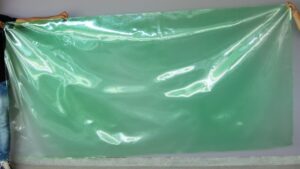
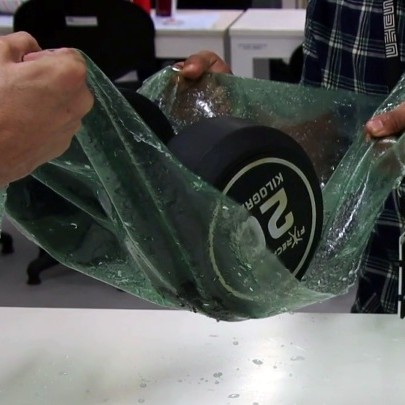
One of the most exploited properties of synthetic materials—and a limiting factor for the broader use of bio-based materials—is their outstanding durability and water stability, achieved through strong intermolecular interactions. However, this molecular stability also makes them persistent disruptors of ecological cycles, in contrast with biological structures, which undergo continuous molecular reconfigurations and use their environments to achieve both excellent mechanical properties and biodegradability. This study takes inspiration from chitinous cuticles to produce the first biological material that uses water to gain strength and become waterproof. The process involves the vitrification of chitosan with small traces of nickel to create a dynamic network of intermolecular bonds using environmental water, resulting in a biomaterial that increases its strength when wet, an uncommon property previously observed in a few biological structures and never achieved artificially. The approach preserves the biomolecule’s original chemistry and biodegradability while avoiding the strong organic solvents typically associated with bio-derived materials. The study describes the principle and demonstrates its application by manufacturing fully biodegradable and aquatically robust consumables and large objects made from Earth’s second most abundant renewable molecule.
Leave a Reply